What Is the Difference between New and Used Medical Equipment?

New and Used Medical Equipment

Table of Contents

More Posts

Send Us A Message

Share:

The difference between new and used medical equipment can feel like a costly guessing game when every purchase directly affects treatment quality, compliance, and long-term ROI. New devices promise warranties and the latest tech, but often strain budgets. On the other hand, pre-owned options can unlock serious savings if risks like hidden wear, missing documentation, or limited support are properly managed. Choosing between new vs second-hand medical equipment isn’t about price alone; it’s about value, safety, and sustainability. This article breaks down the real differences, key considerations, and how to decide which option fits your business goals best.

Bright yellow incandescent light bulb glowing strongly on a black background.
Find the Right Equipment for Your Clinic!

Discover the difference between new and used medical equipment and make smart choices for cost savings, safety, and reliable patient care.

Key Differences Between New and Used Medical Equipment

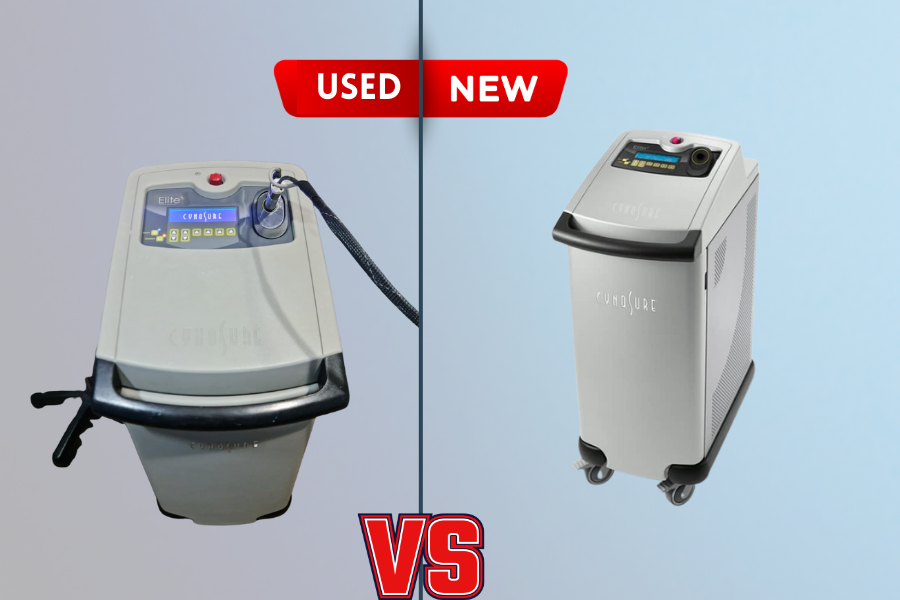
The difference between new and used medical equipment comes down to cost, condition, support, and long-term value rather than quality alone. New devices offer the latest innovations and full manufacturer backing, while used equipment focuses on affordability and faster ROI when sourced correctly. To make the comparison clearer, the table below outlines how both options differ across the most important decision factors for buyers of advanced medical and beauty equipment UAE.

Aspect New Medical Equipment Used Medical Equipment

Cost and Value

Higher upfront cost with predictable expenses
Lower purchase price with strong cost efficiency

Condition and Reliability

Brand-new, unused, factory-tested
Pre-owned, reliability depends on inspection and refurbishment

Warranty and Support

Full manufacturer warranty and service plans
A limited or third-party warranty may apply

Technology and Features

Latest software, upgrades, and innovations
Previous-generation features that still perform effectively

Lifespan

Full operational lifespan ahead
Reduced lifespan depending on prior usage

Safety Assurance

Certified to meet current standards from the manufacturer
Must be verified through servicing and compliance checks

Cost and Value Differences Between New and Used Medical Equipment

The fastest way to see the difference between new and used medical equipment is in the price tag and the long-term value behind it. New devices demand higher upfront investment, often justified by warranties, latest technology, and predictable ownership costs. In contrast, used systems listed as a difference between new and used medical equipment for sale can reduce capital expenses significantly while still delivering strong performance when properly evaluated. In markets like medical equipment Dubai, this cost gap allows businesses to allocate budget toward expansion and additional treatment services without compromising operational efficiency.

Condition and Reliability of New vs Used Medical Equipment

Reliability starts at day one, and that’s where the real difference appears. New equipment arrives unused, factory-tested, and built for immediate peak performance, while pre-owned devices depend heavily on their usage history and servicing quality. This is why the comparison between refurbished medical equipment vs new goes beyond first impressions. When used devices are professionally refurbished, with critical parts replaced and systems fully recalibrated, reliability can approach near-new performance levels. 

Read more about: Second Hand Laser Hair Removal Machines: What Clinics Should Check

The Difference between New and Used Medical Equipment in Warranty and Support

Warranty coverage is often the deciding factor when reliability matters most. New equipment usually comes with full manufacturer warranties, software updates, and direct technical assistance, keeping unexpected service costs to a minimum. With refurbished medical devices vs new, support is typically more limited and may rely on third-party providers rather than the original brand. For buyers sourcing healthcare equipment UAE, the real distinction is not whether support exists, but how comprehensive it is, how fast help is available, and whether spare parts are guaranteed long-term

Technology and Feature Differences in New and Used Medical Equipment

Technology is where the gap is felt fastest. New devices launch with the latest software, upgraded interfaces, and enhanced treatment precision, while used systems often rely on earlier, though still proven, technology. When comparing new & used medical equipment, the real question is whether the most advanced features are essential or if established performance meets daily treatment demands. Across the medical devices Middle East market, many pre-owned platforms continue to deliver reliable results, making feature relevance more important than release date alone.

Read more about: Top Dermatology Equipment for Every Modern Skincare Clinic

Equipment Lifespan: What You Gain with New vs Used Medical Devices?

Lifespan defines how long your investment truly works for you. The difference between new and used medical equipment is clear at this stage: new devices begin with their full operational life ahead, while pre-owned systems have already consumed part of theirs. That doesn’t automatically mean lower value since usage intensity, maintenance quality, and component replacements still matter. For clinics investing in clinic equipment GCC, understanding lifespan helps maximize returns. Even pre-owned machines can deliver reliable service for years if maintenance records are solid and usage history is carefully assessed.

Read more about: Top Questions Clinics Ask Before Buying Used Medical Devices in the Middle East

Safety Is above All: How New and Used Medical Equipment Compare?

Safety is non-negotiable! Patients’ well-being depends on it. New devices arrive fully certified and factory-tested, guaranteeing compliance with the latest standards. However, used equipment, while often functional, requires careful inspection, servicing, and verification to ensure it meets the same safety benchmarks. Choosing the right device for clinic use with safety measures in mind means considering both performance and compliance. Clinics investing in medical equipment Ajman can reduce risks by ensuring every device, new or pre-owned, undergoes strict safety checks, giving staff confidence and patients peace of mind.

Read more about: Exploring the difference between medical supplies and medical equipment in clinics

Which Medical Equipment to Choose: New or Used?

Choosing between new and used equipment for clinic use doesn’t have to be an either-or decision. The most balanced approach is often a hybrid strategy: investing in essential new devices for critical treatments while supplementing with carefully selected pre-owned options to optimize cost.

Here is how it can go: Clinics can prioritize new equipment for treatments where reliability, precision, or patient safety is critical, while using pre-owned devices for procedures where technology updates are less urgent. This strategy helps stretch their budget without compromising care, allowing clinics to expand services efficiently and ensuring every device for clinic use delivers value and reliable patient care.

Read more about: Used Medical Equipment Dubai & UAE: Trusted Buying Guide for Clinics and Hospitals
Final Thoughts on Making Smart Equipment Decisions for Your Clinic
Understanding the difference between new and used medical equipment is key to balancing cost, performance, and patient safety. While new devices offer cutting-edge technology and reliability, pre-owned options provide smart savings and flexibility. By strategically combining both, clinics can optimize budgets without compromising care. Take action today! Explore trusted medical equipment suppliers and choose the equipment that fits your clinic’s needs, ensuring every investment delivers lasting value and the best results.

What is the difference between a medical device and medical equipment?

A medical device is any instrument, tool, or software designed specifically to diagnose, monitor, or treat a medical condition. Examples include syringes, scanners, or pulse oximeters. Medical equipment, on the other hand, is a broader term that includes medical devices as well as the supporting machines, systems, and infrastructure used in healthcare settings, like hospital beds, sterilizers, or clinic furniture.

What medical equipment can be reused?

Medical equipment that is designed for multiple uses and can be properly sterilized or disinfected is suitable for reuse. Common examples include surgical instruments, endoscopes, certain dental tools, and some monitoring devices. Reusable equipment must undergo strict cleaning, sterilization, and maintenance protocols to ensure patient safety and prevent infections.

What is the useful life of medical equipment?

The useful life of medical equipment refers to the period during which a device or machine performs safely and effectively for its intended purpose. This varies by type, usage frequency, and maintenance, typically ranging from 5 to 15 years for most devices. Regular servicing, proper handling, and timely updates can extend lifespan, while neglect or heavy use may shorten it. 

Do medical equipment expire?

Yes, some medical equipment has an expiration date or a defined useful life, especially items with consumable components, batteries, or calibration-sensitive parts. Even durable devices can lose accuracy, safety, or effectiveness over time. Regular maintenance, calibration, and adherence to manufacturer guidelines are essential to ensure safe and reliable operation. Clinics should also track device age and usage to determine when replacement or servicing is necessary, avoiding risks to patient safety and treatment quality.

What is the lifecycle of medical equipment?

The lifecycle of medical equipment is the complete span from acquisition to disposal. It typically includes five stages: planning and procurement, installation and commissioning, operation and routine use, maintenance and upgrades, and retirement or disposal. Properly managing each stage ensures safety, reliability, and cost-efficiency.

How is medical equipment depreciated?

Medical equipment loses value over time due to usage, technological obsolescence, and wear and tear. Depreciation reflects this decline, helping clinics understand when a device may need replacement or upgrading. While some equipment retains its value longer, such as durable imaging machines, others, such as consumable-dependent or tech-sensitive devices, lose value faster.

The Author’s Profile

  • Name: Malik Abu Shamaa

  • Profession: Biomedical Engineer

  • Experience: 7 years 

  • Expertise: Certified KaVo Expert

Equip Your Clinic with Trusted Devices

Recommended Products from Skyline