How to Install the Fractional CO2 Laser Machine in Clinics (Step-by-Step Guide for Dubai and UAE Practices)
❓ How to install the Fractional CO2 Laser Machine correctly is a critical question for aesthetic practices investing heavily in
More Posts

❓ How to install the Fractional CO2 Laser Machine correctly is a critical question for aesthetic practices investing heavily in
🎯 Best fractional laser machine decisions determine whether your treatment rooms stay fully booked or struggle to justify a high-tech
Send Us A Message
⚠️ Fractional co2 laser machine steps are often misunderstood or applied inconsistently, which in turn leads to uneven results, prolonged recovery, and avoidable client concerns. In a competitive co2 fractional laser uae market, unclear treatment protocols can affect patient safety as well as business credibility.
For example:
🔶 Inadequate skin preparation influences energy response.
🔶 Incorrect parameter selection affects healing time.
🔶 Insufficient aftercare guidance increases the risk of complications.
Therefore, aligning every phase of the procedure is essential. This article clearly outlines each stage before, during, and after laser co2 treatment, so you can optimize workflows and achieve more consistent, predictable outcomes.
Discover professional Aesthetic and Dermatology Devices from Skyline Medical, trusted for precision, safety, and proven results.
The fractional CO2 laser machine steps follow three essential phases:
1️⃣ Preparation.
2️⃣ Controlled treatment delivery.
3️⃣ Structured recovery management.
First, fractional co2 laser preparation begins with a comprehensive skin assessment, allowing the practitioner to interpret the patient’s current skin health and translate those findings into precisely calibrated energy settings that match individual treatment goals and tolerance levels.
Next, during the procedure, carefully calibrated energy settings, combined with a controlled technique, determine how the skin responds in real time, thereby shaping the overall CO2 laser experience and directly affecting treatment precision and recovery progression.
Following this, post-treatment care supports the skin’s regenerative process after fractional CO2 laser skin resurfacing by reinforcing the barrier and reducing inflammatory stress, which in turn lowers the risk of complications and promotes more stable, long-term results.
➕ Read more about: A Practical Guide for Clinics Choosing Fractional Laser Equipment in the UAE
Effective results with a co2 fractional laser machine begin long before the first pulse is delivered. Fractional co2 laser preparation centers on structured clinical groundwork that reduces risk and improves treatment precision. This stage typically includes:
Below is a closer look at how each step supports safe and effective fractional co2 laser preparation:
Consultation and consent establish clinical eligibility and legal clarity before Fractional co2 laser skin resurfacing begins. At this stage, the practitioner evaluates skin type, medical history, active conditions, and treatment expectations to determine whether the CO2 laser device can be used safely and effectively.
This assessment directly informs parameter selection and risk management, ensuring that treatment settings align with the patient’s skin response capacity. Clear explanation of benefits, downtime, and potential adverse effects then supports informed consent, creating transparency while setting realistic outcome expectations prior to proceeding.
What happens before the appointment often determines what happens after it. In the sequence of fractional co2 laser machine steps, patient preparation acts as a safeguard against complications that can compromise results.
When the skin is recently tanned, irritated, or sensitized, the CO2 fractional laser machine interacts with it unpredictably, increasing the risk of pigmentation issues and delayed healing. So, practitioners must instruct their patients to:
Start the laser co2 treatment with proper skin cleansing and anesthesia application for a safe and effective session. Within fractional CO2 laser preparation, this stage creates the clinical conditions required for controlled energy delivery using a dermatology laser machine.
👉 Use the following clinical steps to prepare the patient’s skin for safe and controlled fractional CO2 laser energy delivery:
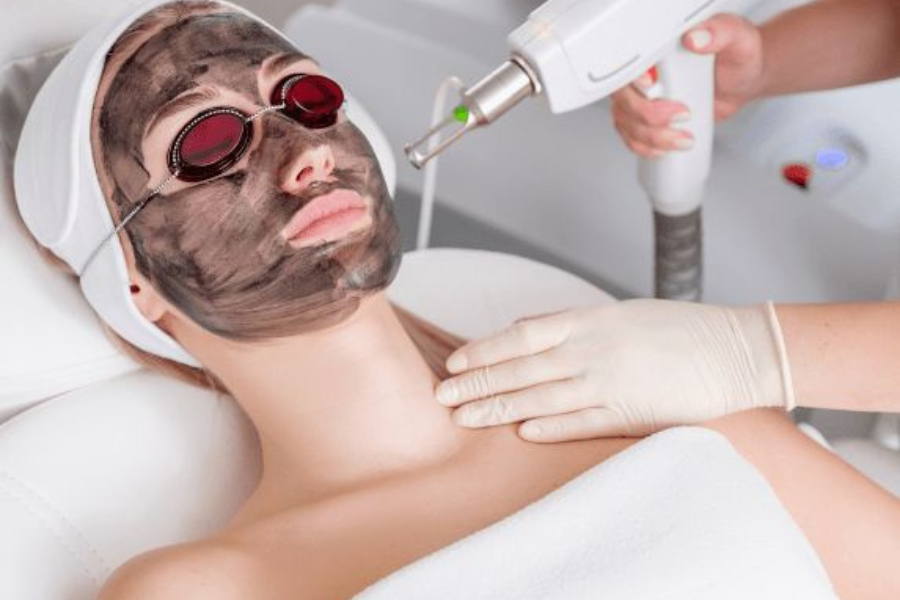
For a professional CO2 laser experience, no CO2 session should begin without strict protective protocols in place. When operating a co2 laser device, safety measures are not optional safeguards, but regulatory and clinical requirements that directly influence treatment outcomes and liability exposure. Clinics that invest in advanced laser systems must equally invest in compliance, including wavelength-specific protective eyewear for everyone in the room, controlled access to the treatment area, proper ventilation or smoke evacuation, and calibrated equipment checks before activation.
➕ Explore Best Fractional Laser Machines Experts Recommend for Multi-Application Aesthetic Treatments
The fractional CO2 laser machine steps at this stage shift from preparation to controlled energy delivery, where technique and timing directly influence tissue response. Once the skin is fully prepared, the workflow must move forward in a structured, uninterrupted sequence to maintain consistency and safety when operating fractional co2 laser machines.
The core procedural steps include:
1️⃣ Removing the numbing cream and initiating laser application.
2️⃣ Performing an optional second pass when clinically indicated.
3️⃣ Completing final cleanup and immediate post-laser skin assessment.
Let’s examine how to execute each of these procedural stages with accuracy and clinical control in the following:
Before initiating a fractional co2 laser resurfacing machine, completely remove the numbing cream, re-cleanse the area to eliminate residue, inspect for uniform dryness, and confirm all preset treatment parameters. Any remaining product or moisture can alter laser-tissue interaction and compromise precision.
Modern systems used in the co2 fractional laser uae market allow adjustable settings, which means outcomes depend heavily on correct parameter selection. Energy level determines the intensity of thermal impact, density controls the percentage of skin treated, depth of ablation influences remodeling potential, and pulse duration affects heat dispersion.
👉 These variables must be customized according to the indication. For example, acne scars require a different calibration than wrinkles or general texture refinement.
Once parameters are confirmed, perform the first pass systematically. Treat the face in controlled sections, like the forehead, cheeks, nose, and then the chin, to maintain coverage accuracy. Technically, the device delivers controlled microthermal columns into the skin, creating fractional zones of ablation surrounded by intact tissue to accelerate healing.
💡 Patients usually report a sensation of heat combined with light snapping, while erythema appears quickly and serves as a visible treatment endpoint.
Throughout the pass, maintain disciplined spacing and avoid excessive overlap to prevent unnecessary thermal buildup. Finally, integrate continuous air cooling to enhance comfort and regulate surface temperature without interrupting procedural flow.
➕ Read more about: How to Install the Fractional CO2 Laser Machine in Clinics (Step-by-Step Guide for Dubai and UAE Practices)
A second pass is performed only when a patient’s condition requires deeper correction. When using a fractional co2 laser device, additional energy delivery may be indicated for deeper acne scars, established static wrinkles, or pronounced textural irregularities that require greater dermal stimulation.
🔔 In most full-face treatments, practitioners perform one pass; however, a second controlled pass can be applied selectively to resistant areas.
With a second pass, the total procedure time typically ranges from 20 to 45 minutes, depending on coverage and indication. It is also worth noting that while more aggressive settings may enhance corrective impact, they also increase downtime and post-treatment inflammation.
Therefore, the decision to perform an additional pass must balance desired improvement with recovery expectations, ensuring results remain both effective and predictable.
The procedure is not complete when the laser stops; clinical evaluation must follow immediately. After using a fractional laser device, begin by inspecting erythema and edema levels to confirm the skin response aligns with the intended treatment depth. Next, assess coverage uniformity to ensure no zones were under- or over-treated.
Once the assessment is complete, gently cleanse the treated area to remove debris and residual tissue byproducts without disrupting the thermal zones created during treatment. Then, after the skin is stabilized, transition directly into immediate post-care preparation, which supports controlled healing and sets the stage for optimal recovery outcomes.
➕ Read more about: CO2 Fractional Laser Machine Price: Complete Cost Breakdown and ROI Guide (2026)
The first minutes after treatment directly influence the quality of recovery. Because a CO2 laser machine for skin creates controlled micro-injuries within the dermis, the barrier is temporarily compromised and highly reactive. So, immediate application of soothing, barrier-support products helps reduce discomfort, limit transepidermal water loss, and accelerate organized healing.
Once initial calming measures are in place, clear aftercare instructions become equally critical. Patients must understand cleansing routines, sun avoidance, and product restrictions, since improper care significantly increases the risk of post-inflammatory hyperpigmentation, especially in darker skin types.
Recovery after laser CO2 treatment follows a predictable biological sequence, and understanding this timeline helps set realistic expectations.
👉 Because a fractional laser device stimulates gradual dermal repair, optimal outcomes often require 2–4 sessions spaced appropriately (around 4–6 weeks between sessions), based on skin condition and targeted treatment. Mild resurfacing usually takes 1–2 sessions, while moderate scarring requires 2–4 sessions.
➕ Read more about: Fractional Laser Machines Explained: Types, Uses, and Clinic Applications in the UAE
CO2 fractional laser uae treatments deliver progressive, long-lasting skin remodeling when performed with precision. The biological foundation behind these outcomes lies in controlled collagen stimulation: thermal micro-columns created by a co2 laser machine for skin trigger a wound-healing response that stimulates new collagen and elastin production over time.
As remodeling continues, patients experience:
However, these results depend heavily on device quality and parameter accuracy. These are factors that directly influence safety and correction depth.
✨ Mastery, not machinery, defines treatment success. A complete understanding of the fractional co2 laser machine steps allows providers across Dubai and the wider GCC market to transform fractional CO2 laser machines into systems that deliver safe, repeatable, and financially sustainable outcomes. Because every phase influences tissue response, healing time, and patient satisfaction, structured execution directly impacts both reputation and revenue.
Remember! Your device is capable of precision when sourced from a trusted medical equipment supplier Dubai. Ensure your workflow matches it!
Yes, fractional CO2 laser treatment can cause discomfort, but it is typically well controlled. During the procedure, patients often describe a sensation of heat combined with a mild snapping feeling as the laser delivers controlled microthermal columns into the skin. To minimize discomfort, a topical anesthetic is applied 30–45 minutes beforehand, and many fractional laser machine for sale systems incorporate air cooling during treatment.
During treatment, most patients describe the sensation as a combination of heat and a light snapping feeling against the skin. As the laser delivers controlled microthermal energy, warmth builds gradually in the treated area. With a topical anesthetic applied beforehand, discomfort is significantly reduced, although deeper settings may feel more intense.
Immediately afterward, the skin typically feels hot and tight, similar to a strong sunburn, for the first few hours. However, this sensation subsides progressively as the skin moves into its natural healing phase.
Not always. While fractional CO2 laser can be performed on multiple skin types, suitability depends on pigmentation level, medical history, and practitioner expertise. Darker skin tones carry a higher risk of post-inflammatory hyperpigmentation if parameters are not carefully adjusted. For this reason, energy level, density, and treatment depth must be customized to the individual. Still, CO2 laser can be used effectively across diverse skin profiles when performed with precise calibration and clinical judgment.
For many patients, yes, especially when scars or wrinkles are structurally deep and resistant to topical treatments. The fractional CO2 laser machine for sale works by creating controlled micro-injuries that stimulate collagen remodeling within the dermis. Over time, this process lifts depressed acne scars, softens static wrinkles, and improves overall skin texture.
A fractional CO2 laser procedure is a skin resurfacing treatment that uses carbon dioxide laser energy to create microscopic columns of controlled thermal injury within the skin. Instead of removing the entire surface, the laser treats only a fraction of the tissue at a time, leaving surrounding areas intact to support faster healing. These microthermal zones trigger a natural wound-healing response, stimulating collagen production and skin remodeling. As a result, the procedure improves acne scars, wrinkles, texture irregularities, and pigmentation while balancing corrective depth with recovery time.
The best fractional CO2 laser machine is one that combines power, precision, versatility, and long-term reliability. A strong example is the 80W Fractional CO₂ Laser System (54,600 AED), widely recognized in the UAE market for balancing performance with cost efficiency. It operates at 10,600 nm and supports deep collagen remodeling, advanced skin resurfacing, and soft tissue procedures. With Fractional, Ultra Pulse, and Continuous Wave (CW) modes, practitioners can adjust energy delivery for both superficial rejuvenation and deeper corrective treatments.
No account yet?
Create an Account