DHA Licensing in Dubai: The Complete 2026 Guide for Clinics & Healthcare Professionals

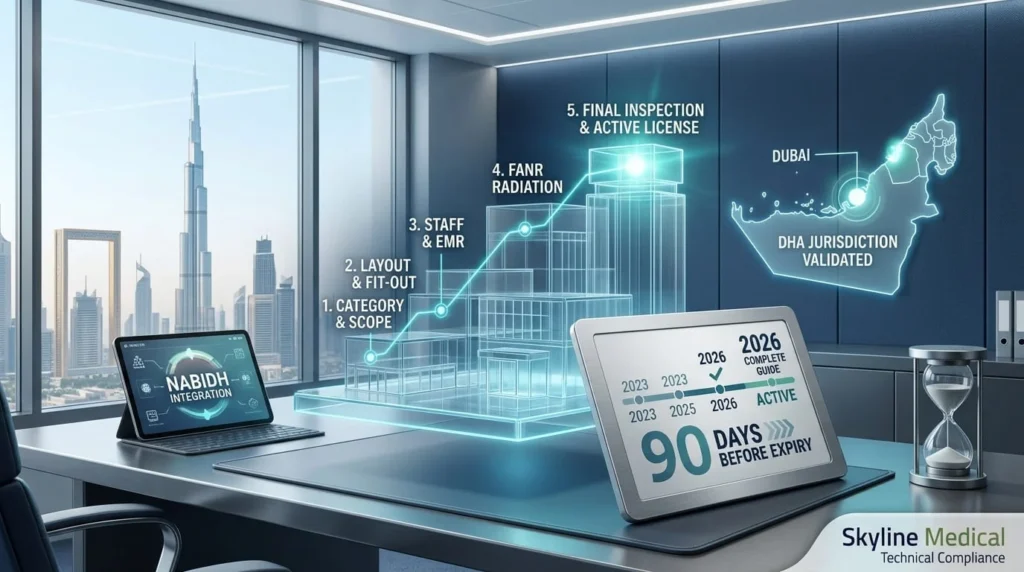
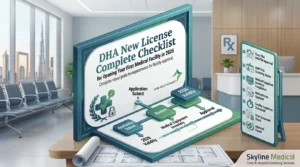
Futuristic 3D infographic showing the 5-stage process for DHA Licensing in Dubai by Skyline Medical.

Table of Contents

More Posts

Send Us A Message

Share:


DHA CLINIC LICENSING

What if the clinic you spent months building could not legally open its doors?

It happens when a lease is signed and rooms are fitted before anyone checks the layout, the specialty list and the staffing plan against what the Dubai Health Authority will approve.

The costly mistake usually happens before the first application.

DHA licensing in Dubai follows a fixed order: initial approval as an inactive facility license, then fit-out, equipment, systems, and staff, then activation after inspection.

Only then can you treat patients or advertise.

This guide covers each stage and the points where owners lose time and money. 

Skyline Medical healthcare licensing and medical approvals can support the process, but DHA decides every approval.

Quick Answer: DHA licensing in Dubai

  • Confirm whether DHA or the Dubai Healthcare City Authority regulates your address.
  • Apply through Sheryan. DHA issues an inactive facility license valid for one year.
  • Complete layout, fit-out, equipment, NABIDH-connected EMR, medical director and licensed staff.
  • Request activation and pass inspection. Add FANR registration for X-ray equipment.
  • Start renewal three months before expiry.

What Is DHA Licensing and Who Needs It?

DHA licensing is the Dubai Health Authority's approval of healthcare facilities and their professionals, and every clinic, center, or hospital under DHA jurisdiction needs it before treating patients.

The facility and each clinician are licensed separately.

DHA's Health Regulation Sector runs both through Sheryan, its online system, which accepts no paper or emailed applications. 

A professional license works only inside a facility with an active license, so a finished fit-out cannot open without licensed staff.

The rules below follow DHA's Manual for Licensing Health Facility (version 1.1, November 2024) and Sheryan service pages, checked October 17, 2026.

Start every project with five questions:

  • Which facility category?
  • Which site and layout?
  • Which licensed staff?
  • Which equipment and EMR?
  • Which inspection date?

What Does the Dubai Health Authority Actually Regulate?

DHA regulates healthcare facilities and professionals under its jurisdiction in Dubai, from clinics to hospitals.

Its licensing covers category, services, location, ownership and staffing, and DHA reviews facility design against its Health Facility Guidelines.

Facility License vs. Professional License: Why You Need Both

A facility license approves the establishment, and a professional license approves the individual clinician, you need both before treating patients.

Our guide to DHA license types and how to apply covers the individual side.

Question Facility license Professional license
Who holds it?
The approved establishment
The individual professional
What is assessed?
Site, category, layout, services
Credentials and assessment by title
What activates it?
Requirements and DHA inspection
Activation by an active facility
Allows treatment alone?
No, active staff are also needed
No, the facility must be active

DHA, DHCC or MOHAP: Which Authority Licenses Your Clinic?

The authority depends on where the facility sits, not on a Dubai postal address.

DHA covers facilities under its jurisdiction, the Dubai Healthcare City Authority covers clinical facilities inside DHCC, and other emirates use their own health authority, such as MOHAP.

 A trade license does not replace healthcare authorization, so confirm jurisdiction in writing before signing a lease.

Which authority applies

Location or matter Main authority What to confirm
Dubai clinic under DHA jurisdiction
DHA through Sheryan
Facility and professional licensing
Clinical facility inside DHCC
Dubai Healthcare City Authority
Its own licensing framework
Facility in another emirate
That emirate’s authority, e.g. MOHAP
Its own e-services
Radiation equipment
FANR, in addition to the health authority
Separate radiation authorization
Building and fit-out
Dubai Municipality, Civil Defence or free-zone authority
Approvals beyond DHA’s review

Which Type of Facility Are You Licensing?

DHA licenses facilities by category, and your category sets the design review, inspection and fees, so settle it before you finalize the lease or layout.

DHA's manual groups facilities into hospitals, outpatient facilities, pharmacies, specialized units, clinical support centers, and long-term residential facilities.

If your plan could fit two categories, ask DHA which applies.

Categories most first-time owners ask about:

  • General and specialty clinics
  • Dental clinics
  • Polyclinics
  • Day surgery and diagnostic centers
  • Hospitals by bed count

Clinics, Dental and Day Surgery Centers: The Most Common Route

Most first-time projects are outpatient facilities: clinics, polyclinics, dental clinics, day surgery and diagnostic or radiology centers.

They can use DHA's single detailed design submission, and DHA's FAQ says day surgery applicants need land-use approval from Dubai Municipality first.

Hospitals, Pharmacies and Specialized Units: What Changes

Bed count classifies hospitals and requires DHA's two-step design submission, including a feasibility study, per the guidelines.

Pharmacies, specialized units, and clinical support centers have their own categories.

The DHA Facility Licensing Journey, Stage by Stage

The journey has four stages: initial approval, an inactive license, activation requirements and a final inspection, and a clinic may treat patients only after the last one.

DHA treats initial approval and activation as two separate Sheryan services.

 The first approves your proposal and layout, the second confirms the built facility is ready.

An inactive license lasts one year, so the clock is running.

Core DHA licensing stages

Stage Result Operating status
New Facility License
Inactive facility license
No treatment, no advertising
Fit-out and readiness
Premises, systems and staff prepared
No treatment, no advertising
Activation and inspection
Active facility license
Services within approved scope

Before each stage, verify:

  • Proposal and layout
  • Initial approval status
  • Valid trade license
  • Medical director and staff licenses
  • EMR and inspection readiness

Stage 1: Get Initial Approval for Your Proposal and Layout

Initial approval is DHA's first decision on your proposal, requested through the New Facility License service, and it produces an inactive license.

You submit a trade license or expected trade name and ownership details, a facility proposal, location details including the Makani number, plot certificate, and Ejari, and a layout designed and approved by prequalified healthcare design consultants.

 A trade license is optional at this stage, and DHA shows an average processing time of five working days.

Our clinic and hospital licensing services in Dubai can support owners in checking the file first.

Stage 2: Use Your One-Year Inactive License Wisely

An inactive license is valid for one year, and while inactive, the facility cannot treat or receive patients or advertise.

Use the year to complete fit-out, equipment, EMR, and staffing against the approved scope.

 If requirements are not completed within the year, DHA cancels the licensing process, and you must reapply. An inactive facility may only amend the license or activate it.

Stage 3: Meet the Activation Prerequisites

Activation requires a valid trade license, a selected medical director, activated professional licenses, an EMR that meets NABIDH standards and, if radiology equipment is installed, FANR registration.

 DHA also asks for evidence of tested NABIDH connectivity. The medical director post cannot stay vacant for more than two weeks.

Stage 4: Pass Inspection and Receive Your Active License

After reviewing the activation request, DHA's inspection team contacts the facility to set a date, and a facility that passes receives an active license for one, two or three years. 

A facility that fails corrects the findings, reschedules and pays the re-inspection fee again.

Sheryan: The Portal Every DHA Application Runs Through

Sheryan is DHA's online system for facility and professional licensing, and every application, payment and document copy runs through it. 

DHA's FAQ notes that a delayed approval can come from an unresolved dashboard action or an incomplete mandatory survey, and that drafts idle for three months are cleared.

Name one person to watch the portal and registered email.

BEFORE YOU SUBMIT

Your location and clinical specialties are decided, but the application route is not.

Review Skyline Medical's
licensing support
or
contact the team
to coordinate the documents and site questions before submission.

Licensing Your Medical Professionals

Every doctor, dentist, nurse and allied health professional needs an individual DHA license, and it can only be activated by a facility that already holds an active DHA license.

The owner's application and the clinician's pathway run side by side, so build hiring and credential timelines into the project plan from the first month.

Plan these steps early:

  • Self-assessment
  • Primary source verification
  • Assessment where required
  • Registration and activation
  • Medical director appointment

DHA Registration Is Not a License: Why the Difference Matters

Registration only confirms eligibility for a position in Dubai; it becomes a license when a facility activates it.

Registration is valid for one year, and a clinician cannot practice while the facility license is inactive, expired, closed or suspended.

Verification and Assessment: What Each Clinician Must Pass

DHA's pathway starts with a free self-assessment, then primary source verification and an assessment by position, either computer-based or oral.

DHA's FAQ gives 15 working days for a new verification report, and candidates get three attempts per position.

Activation: Why a Clinician's License Depends on Your Facility

The facility activates the professional license and must itself be active.

A clinician's first DHA license is full-time, and licenses run for one, two or three years.

DHA Licensing Costs and Timelines

DHA fees depend on facility category, license term and inspection outcome, so there is no single clinic price, and DHA's processing times describe its own review, not your project.

DHA's pages do not match each amount to a facility type, so quote only ranges and confirm your category's figure in Sheryan.

Before budgeting, confirm:

  • Your exact facility category
  • The license term
  • Inspection and re-inspection costs
  • Professional and FANR costs

DHA Licensing Fees: What DHA Charges at Each Stage

Published ranges run from AED 500-2,000 for initial approval, AED 2,500–100,000 for activation by category and term, AED 1,000-4,000 for inspection and AED 500–2,000 for re-inspection.

DHA facility fee ranges, as listed on Sheryan, checked October 17, 2026

DHA charge Published range Qualification
Initial approval
AED 500-2,000
By facility category
Activation, one year
AED 2,500-40,000
By facility category
Activation, two years
AED 4,375-70,000
By facility category
Activation, three years
AED 6,250-100,000
By facility category
Inspection
AED 1,000-4,000
By facility category
Re-inspection
AED 500-2,000
If required

Ranges exclude Knowledge and Innovation Fees, trade licensing, professional registration, fit-out, equipment, EMR and FANR charges.

DHA Processing Times: What the Averages Do Not Tell You

DHA lists an average of five working days for a New Facility License and one working day for activation, but neither predicts when you will open.

Design approvals, fit-out, recruitment, EMR, FANR, inspection scheduling and corrections all fall outside them.

Announce an opening date only after the active license is issued.

Costs Outside DHA's Fees: Fit-Out, Equipment, EMR and More

Your highest costs sit outside DHA: fit-out, equipment, EMR, trade and professional licensing, and radiation approvals.

A layout change after approval is an amendment, so settle the drawings first.

Our medical fit-out and interior design services cover design and build.

Your plans are approved, but equipment positions or room functions have changed

Speak with Skyline about medical fit-out coordination before the change creates a mismatch between the built clinic and the approved layout.

Equipment and Fit-Out Readiness: The Step Owners Underestimate

Readiness means every room is built to the approved layout and equipped for its licensed services before you request inspection, because DHA inspects the finished facility against the approved drawings.

Required equipment depends on category, approved services, and the Health Facility Guidelines, so a generic shopping list is a poor guide.

Build the equipment schedule from the approved room schedule, not the other way around.

Check the readiness file for:

  • Category-specific equipment schedule
  • Installed items matched to room plans
  • Device documents
  • Furnishings and storage
  • Checklist gaps

What DHA Inspectors Check Before Activation

DHA's manual lists the approved layout, enough licensed staff, a medical director, an equipment list, a Civil Defence certificate, approved policies, insurance, a waste contract, the trade license and tested NABIDH connectivity evidence.

Inspectors compare built rooms with approved plans and cannot approve design changes made on site, those need an amendment first.

Equipment by Facility Type: Dental, Dermatology and Beyond

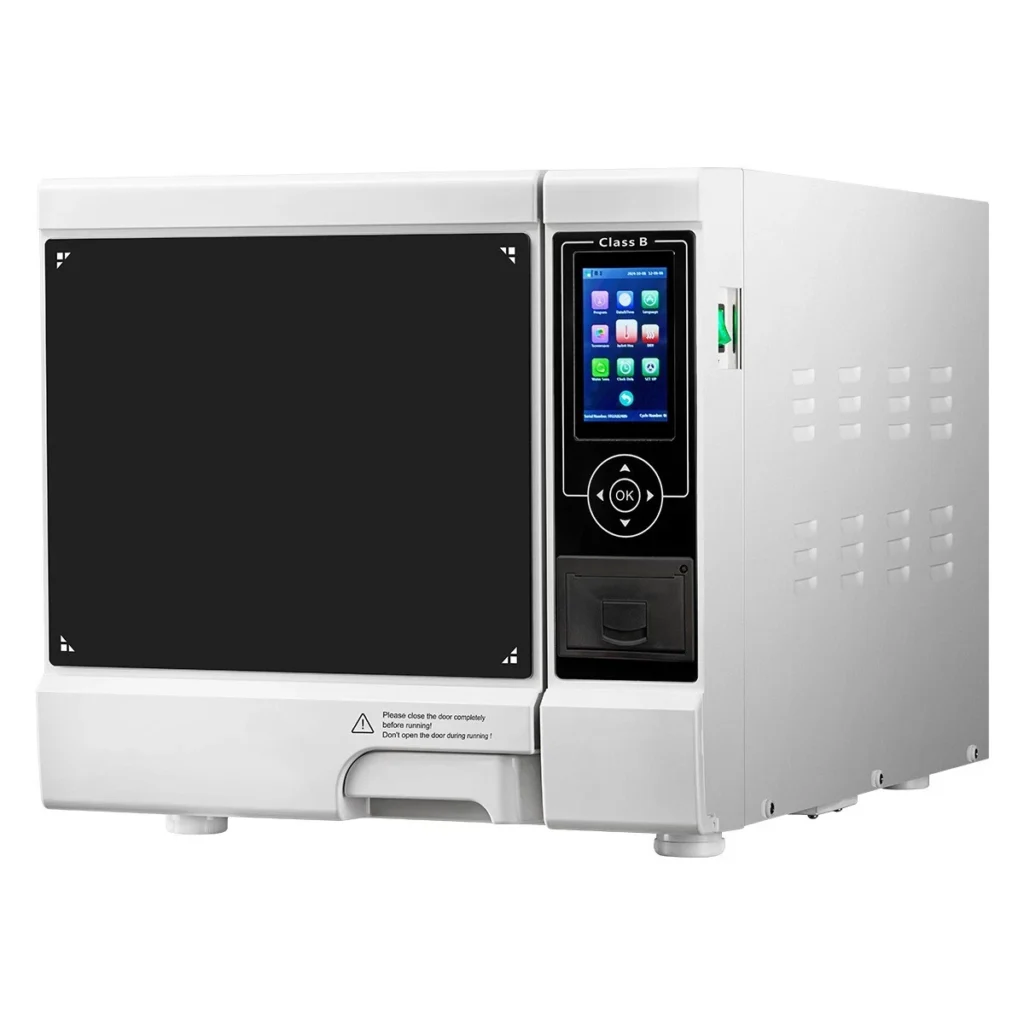
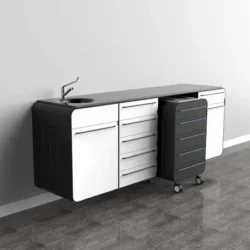
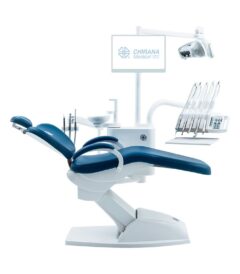
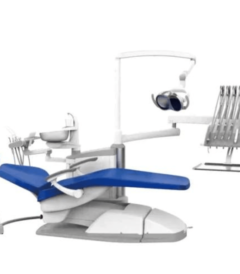
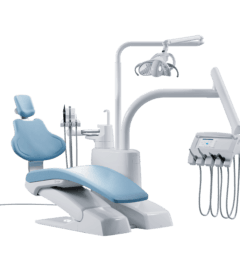
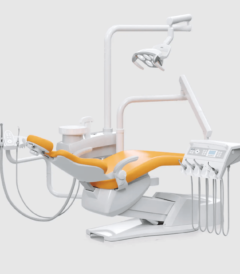
Equipment follows services: dental clinics need chairs, compressors, suction, sterilization, and imaging suited to their treatments, and dermatology clinics need devices matching their licensed procedures.

Skyline's medical equipment for healthcare facilities range covers dental, imaging, sterilization, and dermatology equipment categories.

Confirm suitability with DHA before you buy.

Emergency, Hygiene and Patient-Mobility Items Owners Forget

Inspection readiness also covers easy-to-miss items: emergency equipment, hygiene supplies, waste handling and patient mobility.

Skyline's Authority Requirements category lists items such as automated external defibrillators, digital hygrometers, wheelchairs, trolleys, sanitizer dispensers and medical waste containers.

Compare it with the self-inspection checklist DHA links from its New Facility License page, and check any used equipment or clinic furniture against your approved services.

DHA Health Facility Guidelines: Your Design and Inspection Reference

The DHA Health Facility Guidelines are the design reference for layout, and Part A explains how DHA reviews and inspects a new facility.

They describe an optional pre-inspection assessment at construction completion and a final inspection that ends in approval, approval with conditions, suspension with a second inspection, or rejection. 

If Dubai Municipality or Civil Defence requires a change after DHA approval, the DHA application must be updated and resubmitted.

Your purchase list is growing faster than the approved room schedule

Compare the scope with Skyline's medical equipment range and Authority Requirements category before committing to devices that may need different services or spaces.

When FANR Also Applies

FANR approval applies in addition to DHA whenever your facility will use dental X-ray, CBCT, or other ionizing-radiation equipment, and a DHA license never substitutes for it.

FANR is the federal regulator for radiation sources.

Plan early, because room layout, shielding, and equipment specifications all depend on it.

Coordinate these checks:

  • Regulated equipment and activity
  • Organization authorization
  • Import arrangements
  • Radiation safety review

X-Ray Equipment: Why FANR Registration Comes Before Activation

DHA's manual requires initial FANR registration before activation if radiology equipment will be installed, and its guidelines ask imaging applicants to show the FANR application is being processed.

Not every sensor is a radiation source, so confirm each device with FANR.

Our guide to FANR licensing requirements for medical equipment explains the process.

After Installation: Three Radiation Steps Before You Can Use X-Ray

After installation, the facility submits a radiation safety assessment request, undergoes a DHA X-ray inspection, and obtains FANR's final approval.

Imports need their own permit, so read the FANR import approval guide before the equipment ships, and note the deadlines in the FANR license renewal guide and the common FANR account mistakes.
Your clinic includes dental or diagnostic X-ray equipment.

Review Skyline's FANR licensing guide and the equipment import approval guide before scheduling installation or assuming that the DHA application covers radiation authorization.
Inspection, Re-Inspection and Ongoing Compliance

DHA's final inspection checks that the finished facility matches the approved design and licensing conditions, and an active license is issued only when it passes.

Inspectors review the facility visually against approved plans and note deviations and unfinished work.

DHA may deny activation if compliance is not shown, then allow re-inspection or approval with conditions.

A pre-inspection review covers:

  • Layout and equipment list
  • Trade license, director and staff
  • Civil Defence certificate
  • Policies, insurance, waste contract
  • NABIDH evidence
  • Open corrective actions

What Happens If Your Clinic Fails the DHA Inspection

A facility that fails must correct the findings, reschedule, and pay the re-inspection fee again.

If corrections change the approved design, apply for an amendment first.

A suspension outcome requires a second inspection and an additional fee.

Keep a dated record of every correction.

Inspections Don't Stop After Activation: Staying Compliant

DHA can inspect after activation, and its FAQ says non-hospital facilities should expect at least two visits a year.

Keep policies, insurance, waste contracts, staff licenses and maintenance records current. 

Our medical equipment maintenance and technical support service covers upkeep once the clinic is running.

The Most Common Causes of DHA Licensing Delays

The usual trouble spots are a mismatch between the approved record and the built facility: layout changes, missing documents, unlicensed staff, an unconnected EMR or radiation steps left until last.

Renewal, Amendments and Closure

A DHA facility license must be managed after opening: renewal can start three months before expiry, changes to approved details need an amendment, and an expired or cancelled license means services must stop.

Active licenses run for one, two or three years under the November 2024 manual.

Outstanding fines must be cleared before renewal, and DHA's FAQ says the trade license must stay valid for at least three months at renewal.

Track these items:

  • Expiry and renewal window
  • Trade license validity
  • Staff license status
  • Planned layout or specialty changes
  • Open fines
  • Closure or cancellation conditions

Renewal Window: When to Start and What Late Renewal Costs You

You can start renewal up to three months before expiry, late renewal brings fines, and a license not renewed for more than six months after expiry is cancelled.

Practicing under an expired license violates the facility and its professionals.

A cancelled license cannot be reissued, so the owner files a new application.

Which Changes Require a DHA License Amendment

Adding or removing a specialty, a category change, ownership or name change, building expansion, renovation, layout change, and FANR license updates all require an amendment with fees.

Moving the facility requires an active license, an updated layout and trade license, and a site inspection.

Temporary Closure vs. Cancellation: What Each Means for Your License

A facility can close for one day up to six months but must keep its licenses renewed.

A full closure is allowed once during an active license, and the license reactivates on the end date.

Cancellation requires no open complaint or fines and no licensed professionals other than the medical director, and it stops services immediately.

Your clinic is operating, but equipment or licensed specialties are changing

Skyline's technical services can help review equipment-related work; check with DHA before making a change that affects the approved layout or scope.

Common DHA Licensing Mistakes to Avoid

The costliest mistakes happen before the first application: committing to a site, layout or equipment before category, services and jurisdiction are confirmed.

They usually come from treating initial approval as permission to open, or the fit-out as separate from licensing.

Watch for these six:

  • Signing a lease before confirming the authority
  • Ordering equipment before room approval
  • Letting the inactive license pass one year
  • Treating FANR as optional for X-ray
  • Leaving NABIDH connectivity until last
  • Hiring before a medical director is in place

Conclusion: Your DHA Licensing Roadmap in One Page

DHA licensing in Dubai rewards owners who plan the whole path before they spend.

Confirm the authority and facility category, apply for initial approval, then use the inactive year to finish the layout, fit-out, equipment, EMR, medical director, and staff.

Request activation, pass inspection, add FANR where radiation equipment is involved, and diarize renewal three months ahead.

Your next step: put the address, specialty list, room schedule, and equipment list in one table and check that they tell the same story.

If you want a second opinion, Skyline Medical's clinic and hospital licensing services team can review it with you.

DHA and the other authorities remain responsible for their own approvals.

1. Is a DHA license the same as a facility license?

No. The term covers two separate licenses: one for the establishment and one for each clinician. Both must be active before patients are treated.

2. Can I treat patients while the facility license is inactive?

No. During the one-year inactive period the facility may not treat or receive patients or advertise. Treatment may begin only after activation following a successful inspection.

3. Do I need both DHA and FANR approval for a dental clinic with X-ray?

Yes, if the clinic will install equipment that produces ionizing radiation, such as dental X-ray or CBCT. DHA requires FANR registration before activation. Confirm each device’s status with FANR before you buy.

4. How long does DHA licensing take?

DHA publishes average processing times of five working days for initial approval and one for activation, but the full project takes much longer. Design, fit-out, staffing, EMR, FANR steps and inspection all add time.

5. When can I start renewal?

Within three months before expiry. Clear outstanding fines first and keep the trade license valid.

6. What happens if I do not renew?

DHA applies fines for late renewal, and a license unrenewed for more than six months after expiry is cancelled. A cancelled license cannot be reissued, so the owner files a new application.

7. Who licenses clinics inside Dubai Healthcare City?

The Dubai Healthcare City Authority, under its own framework, not DHA’s Sheryan route. Confirm jurisdiction in writing before you sign a lease.

The Author’s Profile

  • Name: Malik Abu Shamaa

  • Profession: Biomedical Engineer

  • Experience: 7 years 

  • Expertise: Certified KaVo Expert

Equip Your Clinic with Trusted Devices

Recommended Products from Skyline