7 Common Mistakes Clinics Make When Opening a FANR Account

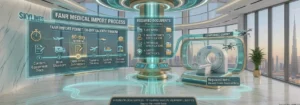
Infographic highlighting "7 COMMON MISTAKES CLINICS MAKE WHEN OPENING A FANR ACCOUNT," featuring a red calendar, a digital tablet displaying "FANR e-Licensing" instructions, and an hourglass on a clinic reception desk[cite: 20].

Table of Contents

More Posts

Send Us A Message

Share:

Almost no FANR application gets rejected for being non-compliant,
it gets delayed for being sloppy.

The same seven mistakes show up again and again, and every one of them is entirely avoidable.

Most clinic owners assume a stalled FANR application means something is fundamentally wrong with their eligibility. 

In practice, it's almost always something smaller: a name that doesn't quite match, a purpose selected without thinking it through, a timeline that didn't account for a 60-day clock. None of these are compliance failures. 

They're attention failures and they're the difference between an application that clears in weeks and one that drags on for months.

We've watched Skyline Medical's FANR account specialists in the UAE walk clinics through this exact list more times than almost anything else we handle.

Here are the seven mistakes we see most often and exactly how to avoid each one:

  • Choosing the wrong regulated activity purpose
  • A Responsible Person who doesn't match the trade license
  • Treating the Radiation Protection Program as a formality
  • Underestimating the import permit's 60-day window
  • Assuming FANR and your facility license are the same process
  • Nominating a Radiation Protection Officer at the last minute
  • Treating renewal as an afterthought

QUICK ANSWER

  • Most FANR delays come from small, avoidable mistakes not actual compliance problems.
  • The most common single mistake is a Responsible Person's name not matching across documents.
  • FANR licensing and your facility's DHA, DOH, or MOHAP license are separate processes confusing them and causing real delays.
  • Renewal has its own 90-day filing rule and is a common source of late, avoidable penalties.

Get the compliance details right from day one.

Discover Skyline Medical’s support for FANR-regulated healthcare projects in the UAE.

Discover Now

Why Do FANR Applications Actually Get Delayed?

FANR applications rarely stall because a clinic is genuinely ineligible, they stall because of the same seven recurring, entirely preventable mistakes.

These seven issues aren't isolated from each other. 

A documentation mismatch often creates a timing problem down the line, a rushed technical submission often triggers the exact kind of follow-up request that eats into a tight import or renewal window. 

Understanding all seven together, rather than treating each as a separate surprise, is what actually prevents them.

Here's the full list, in the order clinics typically encounter them:

  • Choosing the Wrong Regulated Activity Purpose
  • A Responsible Person Who Doesn't Match the Trade License
  • Treating the Radiation Protection Program as a Formality
  • Underestimating the Import Permit's 60-Day Window
  • Assuming FANR and Your Facility License Are the Same Process
  • Nominating a Radiation Protection Officer at the Last Minute
  • Treating Renewal as an Afterthought

1. Choosing the Wrong Regulated Activity Purpose

Selecting the wrong “purpose” on FANR's e-Licensing portal routes the entire application down the wrong review path from the very first step.

This happens more often than clinics expect, because the portal's purpose categories aren't always self-explanatory to a first-time applicant. 

A dental practice that selects a generic category instead of “Dental and Medical” may find its technical documentation reviewed against the wrong criteria entirely, not rejected outright, but stuck in a back-and-forth that a correct selection would have avoided.

2. A Responsible Person Who Doesn't Match the Trade License

A Responsible Person whose passport name doesn't exactly match the trade license including minor spelling variations, is the single most common reason a FANR account application gets sent back for correction.

This is a purely administrative mismatch, not a compliance issue, which makes it especially frustrating:

The business is entirely eligible, but the application still bounces because a reviewer can't reconcile two documents that should say the same thing.

 Cross-checking every name across every document before submission catches this in minutes instead of weeks.

We cover this specific issue in detail in Open FANR Account: Required Documents, Fees & Common Mistakes.

Not sure if your application has one of these issues already?

Skyline Medical's Clinic & Hospital Licensing Services team reviews applications for exactly these seven mistakes before they cost you time.

Discover Services Now

3. Treating the Radiation Protection Program as a Formality

Submitting a generic or templated Radiation Protection Program, instead of one built around your facility's actual layout and equipment, is one of the most common reasons a technical review drags on.

FANR's assessor is checking whether your safety plan realistically matches your specific practice, your actual room layout, your actual equipment models, your actual shielding. 

A program that reads like it was copied from another clinic's file, even a compliant one, invites the exact follow-up questions that slow an otherwise strong application down.

If your Radiation Protection Program planning overlaps with a facility build-out, coordinating it with your Medical Fit-Out & Interior Design plans from the start keeps your shielding and layout documentation consistent across both.

4. Underestimating the Import Permit's 60-Day Window

Applying for an import permit without timing it against a confirmed shipping date is how a fully compliant equipment order still ends up stuck at customs.

The import permit's 60-day validity window runs from issue, not from when the equipment actually ships and international freight timelines rarely cooperate with a permit filed “just to get it done early.” 

This mistake alone accounts for a disproportionate share of the delays we see, precisely because it looks like proactive planning while actually working against the clinic.

5. Assuming FANR and Your Facility License Are the Same Process

Treating FANR approval and your DHA, DOH, or MOHAP facility license as interchangeable or assuming one automatically covers the other is a misunderstanding that can hold up an entire clinic opening.

These are two separate regulatory tracks that happen to run in parallel: FANR licenses the radiation-emitting equipment and the safety program around it, while your facility license covers the clinic premises and staff. 

A clinic that secures one and assumes the other will follow automatically often discovers the gap only when it's already holding up an opening date.

Untangling FANR from your facility licensing timeline, or need equipment already carried through this process?

Skyline Medical's Technical Services team supports clinics through both.

View Technical Services

6. Nominating a Radiation Protection Officer at the Last Minute

Leaving the Radiation Protection Officer nomination until the final stage of the application, rather than confirming it early, creates an avoidable bottleneck right before submission.

The Radiation Protection Officer is a required part of the account setup, not an optional detail to fill in later and clinics that treat it as a formality often find themselves scrambling to confirm someone's qualifications and documentation while the rest of the application is otherwise ready to go.

 Confirming this person early removes one of the easiest bottlenecks to avoid entirely.

7. Treating Renewal as an Afterthought

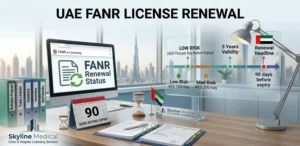
Assuming FANR license renewal is a routine formality to handle whenever is how clinics end up filing late and FANR requires renewal applications at least 90 days before expiry, not “whenever it's convenient.”

This mistake looks different from the other six because it happens years after the original application succeeded, which is exactly why it catches experienced clinic owners off guard. 

The familiarity that comes with having been through the process once is what makes the 90-day filing rule easy to underestimate the second time around.

None of These Mistakes Are About Compliance They're About Attention

Every mistake on this list is entirely avoidable, and none of them reflects a clinic being unfit to hold a FANR license. 

A mismatched name, a rushed safety program, a permit filed without checking a shipping date these are attention problems, not eligibility problems. 

Catch them before you submit, and a FANR application moves through review the way it's supposed to: as routine paperwork with a known outcome, not a source of ongoing uncertainty.

1. What's the single most common reason FANR applications get delayed?

A Responsible Person’s name not matching exactly across the trade license and passport it’s a purely administrative mismatch, but it’s the most frequent single cause of delay we see.

2. Can a rejected FANR application be resubmitted immediately?

Generally yes, once the specific issue is corrected, though resubmission still re-enters FANR’s review queue rather than skipping ahead.

3. Does one mistake affect the whole application, or just that section?

Yes. A documentation mismatch can delay the entire application, while a technical detail may only hold up the review of that specific section. 

4. Should a clinic handle its FANR application in-house or with a consultant?

Either can work, what matters more than who handles it is whether the seven issues above are checked for before submission, regardless of who’s preparing the file.

5. How can we tell if our current FANR account has one of these issues?

Cross-check your Responsible Person’s documents against your trade license, confirm your Radiation Protection Officer and Program are current, and verify your license’s expiry date against the 90-day renewal rule.

The Author’s Profile

  • Name: Malik Abu Shamaa

  • Profession: Biomedical Engineer

  • Experience: 7 years 

  • Expertise: Certified KaVo Expert

Equip Your Clinic with Trusted Devices

Recommended Products from Skyline