FANR License UAE: Requirements, Costs & Application Guide for Clinics & Importers 2026
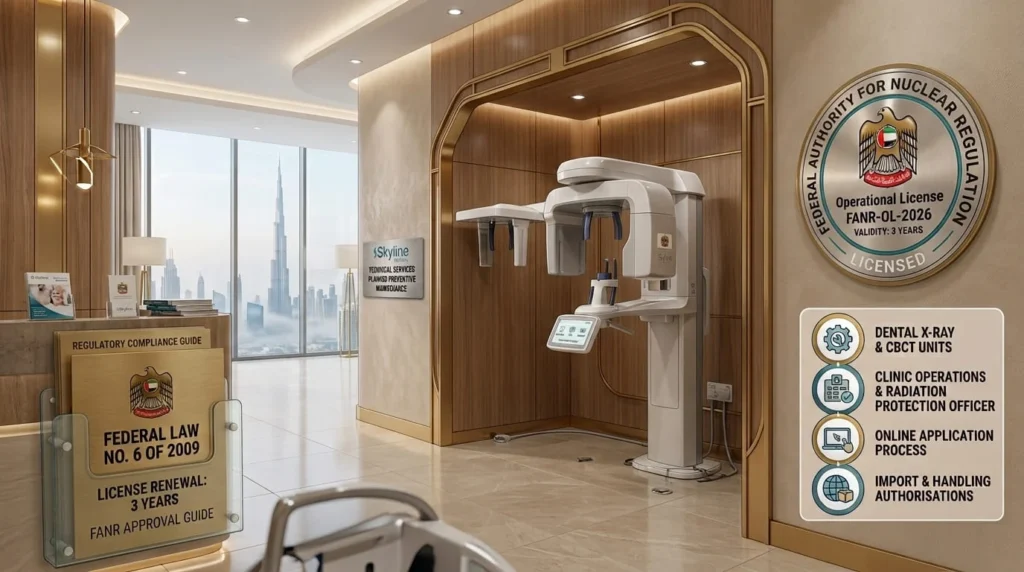
Before installing any dental X-ray, CBCT, or medical imaging equipment in the UAE, clinics and importers must obtain FANR approval,
More Posts

Before installing any dental X-ray, CBCT, or medical imaging equipment in the UAE, clinics and importers must obtain FANR approval,
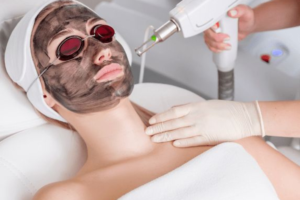
⚠️ Fractional co2 laser machine steps are often misunderstood or applied inconsistently, which in turn leads to uneven results, prolonged

Send Us A Message
A clinic can be beautifully fitted out, fully staffed, and days away from opening yet one X-ray or CBCT unit can still create a regulatory bottleneck if FANR compliance was left until the end. For investors entering the UAE from Saudi Arabia or elsewhere in the GCC, this is one of the easiest planning gaps to underestimate: buying the equipment is not the same as being authorised to possess, import, install, or use a regulated radiation source. |
FANR Approval is the common business term used for authorisation from the UAE Federal Authority for Nuclear Regulation. In practice, FANR may issue a licence, registration certificate, or an import/export approval depending on the activity and the type of radiation source involved.
The key trigger is ionising radiation: dental X-ray generators, panoramic units, cephalometric systems, and CBCT equipment can fall within FANR’s regulatory scope, while many aesthetic lasers use non-ionising radiation and do not become FANR-regulated merely because they are used inside an aesthetic clinic.
That is why the smartest clinic setup sequence connects compliance with design and procurement from day one.
Skyline Medical can coordinate clinic and hospital licensing services, medical fit-out and interior design, equipment planning, and technical services as one connected workflow so the X-ray room, shielding considerations, equipment documentation, installation, and maintenance plan are not treated as separate last-minute tasks.
FANR Approval is the regulatory authorisation required when a UAE entity carries out activities involving radiation sources or radiation generators that fall under FANR control.
The Federal Authority for Nuclear Regulation is the UAE’s federal regulator for nuclear safety, radiation protection, security, and regulated radiation activities.
For clinics, the most relevant point is straightforward: if a device generates ionising radiation such as X-rays FANR may regulate its possession, use, handling, import, export, storage, transport, or disposal.
To understand FANR correctly, focus on three questions before anything is purchased or installed:
A clinic is not regulated by FANR simply because it is called a dental or aesthetic clinic; FANR applicability follows the regulated source and activity.
This is why two aesthetic clinics can have different compliance obligations: one may operate only non-ionising aesthetic devices, while another may also use X-ray imaging or another regulated radiation generator.
The equipment list, room use, and intended activity are therefore more important than the marketing category of the facility.
Dental clinics that possess or operate regulated X-ray equipment generally need the relevant FANR authorisation, while aesthetic clinics need it only when their equipment or activities fall within FANR’s ionising-radiation scope.
Every clinic should still assess FANR applicability early, because assuming “this device is medical, so DHA approval is enough” can create a gap between facility licensing and radiation regulation.
For dental practices, the issue arises quickly because diagnostic imaging is common. Intraoral X-ray generators, panoramic imaging, cephalometric systems, and CBCT are built around X-ray production.
Aesthetic clinics are different: many laser hair removal, fractional laser, radiofrequency, and light-based devices use non-ionising energy.
Those technologies may have other health-authority, product, facility, or safety requirements, but they should not be labelled FANR-regulated solely because they are “laser” equipment.
The practical distinction for clinic owners is:
The clearest FANR trigger in clinics is a radiation generator capable of producing ionising radiation, especially X-ray equipment used for diagnosis or image guidance.
For dental facilities, that commonly includes intraoral X-ray generators, panoramic X-ray units, cephalometric imaging systems, and CBCT scanners.
The clinic should evaluate the generator itself, its intended use, the room, and any related import or handling activity.
A useful technical distinction is that a digital intraoral sensor is not itself the X-ray source. It records the image produced when an external X-ray generator exposes the area.
This is important when building an equipment inventory: the sensor belongs to the imaging workflow, but regulatory control of radiation generation centers on the equipment that actually produces ionising radiation.
Typical equipment and planning points include:
FANR planning should start before equipment purchase and before the X-ray room is built because licensing, import, room design, shielding, installation, and equipment documentation affect one another.
If these decisions are sequenced badly, a clinic may end up redesigning a room, delaying a shipment, changing equipment, or revising documentation after money has already been committed.
The most efficient approach is to lock the clinical service scope first, then map the equipment, identify regulated radiation generators, coordinate the room design, and prepare the licensing path in parallel.
For Saudi investors opening a Dubai clinic, this is especially valuable because the project may already involve company setup, DHA facility licensing, professional licensing, fit-out approvals, procurement, and staffing. FANR should be integrated into that master schedule, not added as a final checkpoint.
Planning FANR early helps align:
The X-ray room is not just an interior-design item; it is part of the radiation-safety system around the equipment.
Room use, barriers, shielding, equipment orientation, access control, and technical provisions should be considered before construction is finalised.
Skyline’s medical fit-out and interior design service is therefore most valuable when engaged early enough to coordinate the clinical layout with authority requirements and equipment pre-installation needs.
Planning a clinic in the UAE?
Map the approvals before the drawings and purchase orders become fixed. Skyline Medical can connect Clinic & Hospital Licensing Services with Medical Fit-Out & Interior Design so FANR-related rooms, authority submissions, and equipment requirements are planned together.
The FANR approval process generally moves from entity registration and role assignment to equipment and radiation-safety documentation, application review, and any activity-specific approval such as import/export permission.
The exact path depends on the regulated activity and the source category, so clinics should avoid copying another facility’s application as if every project were identical.
A practical clinic-side sequence is:
Import/export approval and the clinic’s standing authorisation are related but not interchangeable.
Current FANR regulation treats import and export of radiation sources subject to a licence as a regulated activity and requires approval for the specific movement.
The approval window for an authorised import/export is time-limited, which is why procurement teams should coordinate shipping dates with the licensing team rather than dispatch equipment first and solve the paperwork later.
FANR regulates radiation-related activities at the federal level, while healthcare authorities regulate the health facility and professional practice within their jurisdictions.
A clinic may therefore need both a healthcare facility licence and FANR authorisation. One does not automatically replace the other, because they answer different regulatory questions.
In Dubai, DHA manages healthcare facility licensing and maintains current dental guidance, including dental radiology guidance.
In Abu Dhabi, the Department of Health (DoH) is the local healthcare regulator. MOHAP provides health-facility licensing services within its applicable jurisdiction.
A Saudi investor looking at multiple emirates should therefore avoid using “DHA licence” as a generic term for the entire UAE.
Think of the approvals as parallel layers:
The most common FANR delays are usually caused by sequencing and documentation problems:
Applying under the wrong activity, providing incomplete equipment information, leaving the radiation-safety plan too late, or shipping regulated equipment before the approval path is ready.
These are project-management errors more than technical mysteries, which means most of them can be reduced with a strong pre-application checklist.
Watch for these preventable problems:
Skyline Medical supports FANR-related clinic projects by connecting authority licensing, medical fit-out, equipment supply, and technical support instead of treating them as separate vendors and handoffs.
That integrated model is particularly useful for dental and mixed-use clinics because radiation equipment affects room design, documentation, installation, testing, and maintenance from the first project stage to daily operation.
Skyline’s connected support covers:
The safest way to approach FANR Approval is to make it part of the clinic’s first planning decisions, not a final task after the equipment is ordered.
Start by identifying which devices generate ionising radiation, map the regulated activity, confirm the applicable FANR authorisation, and then connect that requirement to facility licensing, room design, procurement, import timing, installation, and maintenance.
For dental clinics, this is especially important because X-ray and CBCT imaging is often core to the clinical model.
For aesthetic clinics, the right approach is precision: do not assume every laser is a FANR device, but do not assume an aesthetic clinic is outside FANR either if it also operates regulated imaging or radiation-generating equipment.
Ready to plan your clinic with fewer regulatory surprises?
Speak with Skyline Medical about a coordinated pathway covering clinic licensing, medical fit-out, equipment selection, and ongoing technical support for your UAE project.
Dental clinics that possess or use regulated X-ray equipment should obtain the FANR authorisation applicable to their activity.
A dental clinic with no regulated radiation source may have a different requirement, so the equipment inventory should be checked before setup.
No. FANR applicability depends on the equipment and regulated activity, not the “aesthetic clinic” label.
Many aesthetic laser and RF devices use non-ionising energy, however, an aesthetic clinic that also uses regulated X-ray or other ionising-radiation equipment may require FANR authorisation.
No. A digital intraoral sensor detects and records the X-ray image produced by an external X-ray generator.
The generator is the device that creates ionising radiation, so clinics should distinguish the source from the detector when preparing the equipment inventory.
No. FANR regulates radiation-related activities at the federal level, while DHA regulates healthcare facilities and professionals in Dubai.
A Dubai clinic using regulated X-ray equipment may need both the relevant DHA facility approvals and FANR authorisation.
Start during the planning and equipment-selection stage before finalising the X-ray room or shipping regulated equipment.
Early planning allows licensing, fit-out, shielding, procurement, and import timing to be coordinated instead of corrected later.
There is no single processing time that applies to every FANR authorisation.
The timeline depends on the activity, the type of source, the completeness of the application, and whether technical clarifications or revisions are required.
Build regulatory review time into the project schedule rather than relying on an assumed fixed number of days.
No account yet?
Create an Account